Celebrating William Tyndale
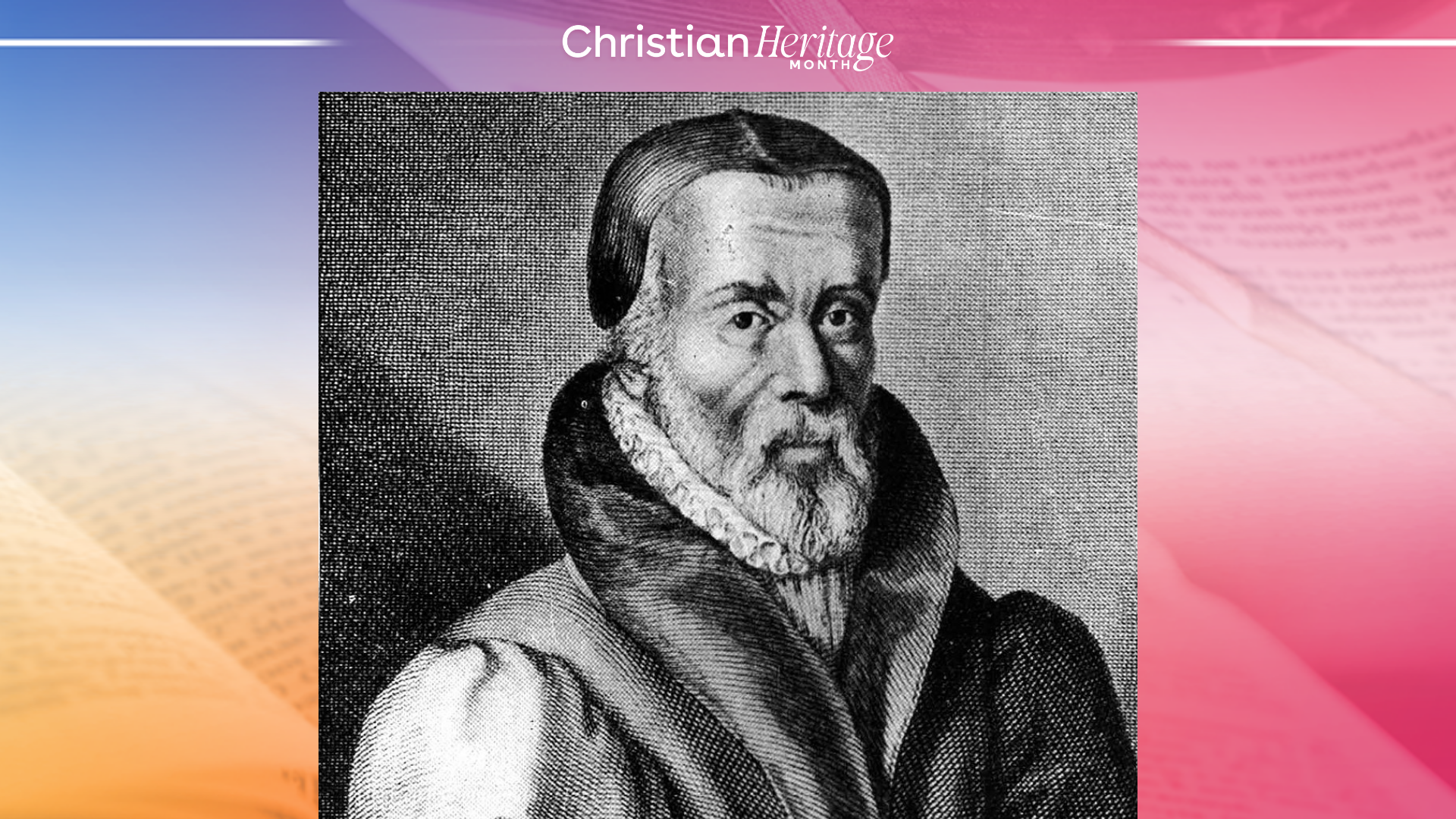

William Tyndale believed that everyone, not just priests and scholars, deserved to hear and read the Word of God, and he was willing to give up everything to make it happen.
Born in England around 1494, Tyndale lived during a time when the Bible was only available in Latin, completely out of reach for the average person. Tyndale’s heart burned with a simple but revolutionary vision: to put the Scriptures into everyday language so that even “the boy that driveth the plough” could know the Word of God for himself.
This wasn’t just controversial, it was dangerous. Translating the Bible into English was considered a crime against the Church and the Crown, but Tyndale was undeterred. He once declared boldly, “I defy the Pope and all his laws. If God spares my life, I will cause a boy that drives the plow to know more of the Scriptures than you do.”
Forced to flee England, Tyndale worked tirelessly across Europe, translating the New Testament from Greek into English.
Smuggled copies of his Bible began to circulate back home, sparking hope, controversy, and revival. His translation would eventually form the foundation for the King James Bible and nearly every English Bible that would follow.
But his boldness came at a cost. Betrayed by someone he trusted, Tyndale was arrested, imprisoned, and ultimately executed in 1536. His final prayer was simple and powerful: “Lord, open the King of England’s eyes.”
Just a few years later, that prayer was answered. The English Bible became legal, and Tyndale’s dream to put God’s Word into the hands of ordinary people became a reality.
William Tyndale’s legacy reminds us that God’s Word is a gift meant for everyone, and that sometimes the greatest changes in history are sparked by courage, sacrifice, and a heart fully surrendered to God’s calling.

Follow along this month on-air and online as we journey through history and celebrate the rich legacy of those who answered God’s call during Christian Heritage Month on BRIGHT-FM.
More SHINE Daily